
The Easiest Sourdough Pizza Dough
Sourdough Pizza Dough might sound like a weekend project, but this one keeps it manageable and worth every minute. You mix a few simple ingredients, give the dough time to rest and rise, then shape it into pizza that tastes like it came out of a brick oven. It’s got that signature sourdough flavor, mildly tangy, deeply satisfying, and bakes up with a chewy center and crisp, golden crust.
The process is mostly hands-off, with a few quick folds along the way to build structure. You can use the dough right away or stash it in the fridge for later in the week. It freezes well, too, so you can always have some ready for last-minute pizza night. This dough is sturdy, flavorful, and plays nice with whatever toppings you’ve got, whether working with a pizza stone or just a trusty sheet pan.

As an Amazon Associate I earn from qualifying purchases.
Why You’ll Love Sourdough Pizza Dough
- Real Sourdough Flavor: The natural fermentation gives the crust a subtle tang and deep flavor you won’t get from store-bought dough.
- Crisp Outside, Chewy Inside: Stretching and folding builds structure for that perfect pizzeria texture—crispy edges with a soft, airy middle.
- Make Now or Later: The dough holds well in the fridge for days or can be frozen, so you can prep ahead without the rush.
- Simple Ingredients: Just flour, water, starter, and salt—nothing fancy, no fuss, just the basics that work.
- Oven to Grill Friendly: Whether you bake it on a stone, steel, or grill, it holds up beautifully and cooks evenly every time.
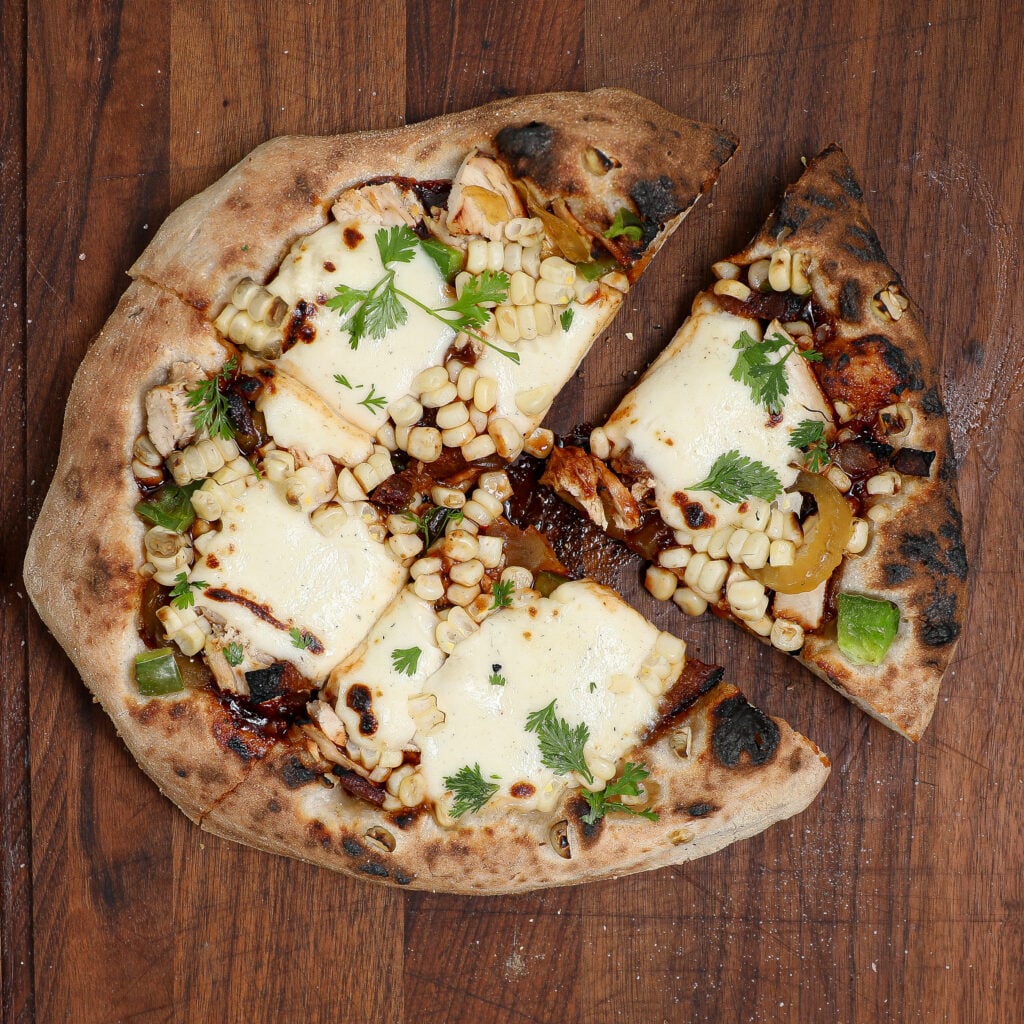
Ingredients Needed To Make Sourdough Pizza Dough
Make sure you scroll down to the recipe card to see the full list of ingredients needed for this recipe.
- Active sourdough starter
- Warm water
- 00 pizza flour
- Fine sea salt
Tips, Substitutions, & Variations
Tips
- Always use active, bubbly starter for best results.
- If your dough feels too sticky, add a sprinkle of flour while shaping.
- A pizza stone or steel will help give you a crisp, blistered crust.
- Don’t overtop—keep it light for best oven spring and texture.
Substitutions + Variations
- Flour: You can substitute bread flour if you don’t have 00 pizza flour. All-purpose will work in a pinch but won’t have quite the same chew or stretch.
- Salt: Use kosher salt if needed, just adjust quantity slightly (closer to 2.5 tsp).
- Add-ins: Mix in dried herbs or garlic powder to the dough for extra flavor.
- Grain variation: Swap ½ cup of the flour with whole wheat or spelt for a nutty flavor.
Pizza Cooking Methods: Oven, Grill & Pizza Ovens
- Wood-Fired Oven: Preheat to 750–900°F. Bakes fast—1 to 2 minutes. Keep toppings light and rotate for even charring.
- Gas Pizza Oven (like Gozney): Aim for 650–800°F. Cooks in 2–4 minutes. Preheat fully and turn the pizza halfway through.
- Home Oven + Pizza Stone or Steel: Crank to 500–550°F. Preheat stone/steel for 45 min. Bake 7–10 minutes. Finish under the broiler for extra blistering.
- Grill: Use a cast iron pan or indirect heat at 500°F. Crisp bottom and subtle smoky flavor. Oil dough lightly to prevent sticking.
How To Make Sourdough Pizza Dough
- Mix the starter, water, flour, and salt in a bowl until everything is just combined.
- Let the dough rest while covered to help it relax.

- Stretch and fold the dough a few times over the next couple of hours to build strength.
- Let it rise until it’s puffy and almost doubled in size.

- Divide the dough into portions and shape them into balls.
- Let the dough rest again before using or store it in the fridge or freezer for later.
- When ready, gently stretch the dough into pizza shapes and add your favorite toppings.
- Bake on a hot surface until the crust is golden and the bottom is crisp.

Commonly Asked Questions
Can I make the dough ahead of time?
Yes, once the dough is portioned, you can store it in the fridge for up to 3 days. Just bring it to room temperature for about an hour before shaping.
What’s the best flour to use for this dough?
00 pizza flour gives you that classic chewy, bubbly crust, but bread flour is a great substitute. All-purpose flour works in a pinch, though the texture may be a little softer.
How do I know if my sourdough starter is active enough?
Your starter should be bubbly, doubled in size within 4–6 hours of feeding, and pass the float test (a small spoonful floats in water). This ensures a good rise and flavor in your dough.
My dough feels sticky. What should I do?
A little stickiness is normal, but if it’s hard to handle, lightly flour your hands or work surface while shaping. Don’t overdo it—too much flour can toughen the dough.
Can I freeze the dough?
Absolutely, you can freeze the dough! Here’s how I recommend doing it:
Place your sourdough pizza crust dough in a freezer-safe airtight container. Before adding the dough, drizzle about ½ teaspoon of olive oil inside the container and brush it around to lightly coat the interior—this helps prevent sticking. Then place your dough ball inside. Make sure the container is only about half full to allow room for the dough to expand. When you’re ready to use it, thaw the dough in the refrigerator overnight, then let it come to room temperature before shaping and baking.
Do I need a pizza stone or steel?
It’s highly recommended for the best crust. A hot stone or steel helps mimic a pizza oven by crisping the bottom while the top bakes, giving you that nice blistered finish.
Can I use this dough on the grill?
Definitely. Just preheat the grill with a pizza stone or cast iron pan and make sure the dough is well-floured before transferring. Keep an eye on it—it cooks fast.

Sourdough Pizza Dough
Equipment
- Dough hook and stand mixer (optional)
- Plastic wrap or reusable cover
- kitchen towel
- Dough scraper or spatula
- Storage containers with lids
- Kitchen scale (recommended for accuracy)
- Clean surface for shaping
Ingredients
- ½ cup active sourdough starter
- 1⅔ cups warm water
- 4 cups 00 pizza flour
- 2 tsp fine sea salt
Instructions
Mix the dough
- In a large bowl, whisk together the sourdough starter and warm water until smooth. Add the flour and salt. Mix by hand or with a stand mixer and dough hook until just combined and slightly shaggy—do not overwork.
Initial rest
- Cover with plastic wrap and a towel. Let the dough rest for 30 minutes.
Stretch and fold
- Perform a series of 4 stretch-and-folds:
- Every 30 minutes, grab one side of the dough, stretch it upward, and fold it toward the center. Repeat with the other three sides.
- After each fold, cover again and rest.
- Do this a total of 4 times.
Bulk rise
- After final fold, cover and let rise at room temperature until nearly doubled in size (roughly 4–6 hours depending on ambient temperature).
Portion
- Turn dough out onto a lightly floured surface. Divide into 4 balls (for 12-inch pizzas) or 2 larger balls. Shape into tight rounds.
Use or store
- Use now: Let rest for 30–60 minutes before shaping into pizzas.
- Refrigerate: Lightly oil a container and store dough for up to 3 days. Let rest at room temp for 1 hour before using.
- Freeze: Wrap each ball individually, place in an airtight container or bag, and freeze for up to 4 months. Thaw fully at room temp for 6–12 hours before using.
Shape and bake
- On a floured surface, gently stretch the dough from the center out, avoiding the edges. This helps create a bubbly, airy crust.
- Top and bake as desired!
Notes
Tips
- Always use active, bubbly starter for best results.
- If your dough feels too sticky, add a sprinkle of flour while shaping.
- A pizza stone or steel will help give you a crisp, blistered crust.
- Don’t overtop—keep it light for best oven spring and texture.
Substitutions + Variations
- Flour: You can substitute bread flour if you don’t have 00 flour. All-purpose will work in a pinch but won’t have quite the same chew or stretch.
- Salt: Use kosher salt if needed, just adjust quantity slightly (closer to 2.5 tsp).
- Add-ins: Mix in dried herbs or garlic powder to the dough for extra flavor.
- Grain variation: Swap ½ cup of the flour with whole wheat or spelt for a nutty flavor.
Once you get the hang of it, this dough becomes part of your regular rotation. I like making extra so I’ve always got some ready in the freezer. It’s got that chewy, crisp crust that makes homemade pizza taste like it came out of a wood-fired oven. Totally worth the bit of prep.
Can we use all purpose flour instead of pizza flour? Thanks.
The texture and taste will be slightly different but yes! you can