
Sourdough Soup Bread Bowls with Active Starter
If you’re the kind of person who thinks soup tastes better when you can eat the bowl, these Sourdough Bread Bowls are for you. These homemade bowls are chewy on the outside, soft in the center, and sturdy enough to hold everything from chunky chili to creamy chowder without falling apart. The dough comes together with just a few basic ingredients and a good sourdough starter, and while the rise time takes patience, the hands-on work is minimal. You can bulk ferment overnight or let the dough chill in the fridge for deeper flavor. The end result is bakery-quality bread with a crisp crust, perfect tension, and that signature tang. Serve them with hot soup, stew, or even filled with a hearty salad if you’re feeling bold.

As an Amazon Associate I earn from qualifying purchases.
Why You’ll Love Sourdough Soup Bread Bowls
- Edible Bowl Factor: Holds hot soups, stews, and chowders without leaking or going soggy.
- Crust With Structure: Bakes up with a chewy crust and soft interior that tears perfectly.
- Minimal Hands-On Time: Most of the time is spent letting the dough rise, not babysitting it.
- Sourdough Depth: The long fermentation gives each bowl that signature tangy flavor.
- Meal Upgrade: Turns simple soup into a full, satisfying meal with zero extra dishes.
Ingredients Needed To Make Sourdough Soup Bread Bowls
Make sure you scroll down to the recipe card to see the full list of ingredients needed for this recipe.
- Bread flour
- Wheat flour
- Olive oil
- Sourdough starter (active and bubbly)
- Water (room temperature)
- Sea salt
Variations, Swaps, & Tips
Seasoning Variations:
- Add 1 tbsp herb seasoning mix (Herbs de Provence, Greek seasoning, Everything Bagel, Za’atar) to the dough.
- For a single herb, add 1 tsp dried rosemary, thyme, or basil.
Sweet Variations:
- Add 1 cup semi-sweet chocolate chips during fold process for a chocolate chip sourdough.
- Add freeze-dried fruit like strawberries, blueberries, or coconut flakes (chopped <¼”) during folds.
- Yuzu sourdough: Add dried yuzu or dried fruit pieces during folds.
Spiced Bread:
- Add ½ tsp ground cinnamon and 2 tbsp sugar for a cinnamon swirl effect.
Milk/Flour Swaps:
- This recipe is designed for bread and wheat flour — wheat flour contributes to structure and flavor. Using only gluten-free flours is not recommended here.
Notes & Tips
- Salt should be added on top of the flour to avoid killing the starter.
- Folding the dough multiple times creates the necessary air pockets and texture.
- Refrigerated rise softens the dough’s crumb for a tender, sandwich-like texture.
- Use a tea towel lining for proofing baskets for easy release without excess flour.
- Avoid over-proofing — dough should double but not more.
- Cooling the bread completely helps set the crust and crumb, though it’s tempting to dig in right away!

How To Make Sourdough Soup Bread Bowls
- Feed your sourdough starter a few hours before you plan to start so it’s active and bubbly.
- Mix the starter with water and oil, then add the flours and salt and stir until a rough dough forms.
- Let the dough rest, then do a series of folds with resting time in between to build structure.
- Choose your rise method: leave it at room temperature overnight or refrigerate it for a longer, slower rise.
- After rising, divide the dough into equal portions and shape each into a tight ball.
- Place the dough balls seam side up in floured baskets or towels and let them rise again until slightly larger.
- Preheat your oven and baking surface, then transfer the dough seam side down onto parchment.
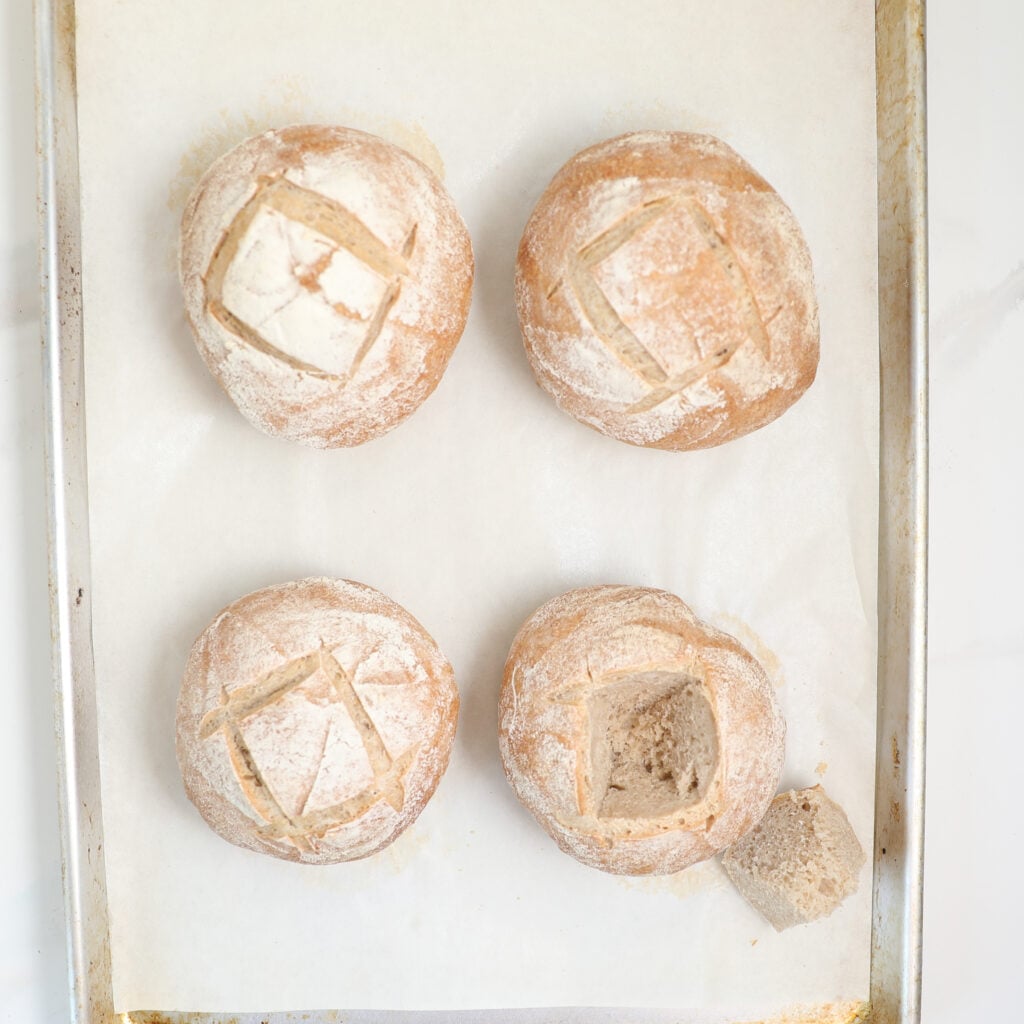
- Score the tops with a sharp knife and bake until golden brown.
- Let the bread cool completely before serving so the crust and crumb finish setting.
Oven Temperatures
Oven temperatures can vary significantly from one oven to another. To achieve consistent results, it’s crucial to know the exact temperature inside your oven. The safest and most accurate way to determine this is by using an oven thermometer. This simple tool can help you avoid underbaking or overbaking your treats.
Commonly Asked Questions
Can I make the dough ahead of time?
Yes, you can let the dough rise in the refrigerator for up to 48 hours after folding. This slow ferment improves flavor and makes it easier to fit baking into your schedule.
How do I know when the dough is done rising?
The dough should roughly double in size and feel slightly springy when poked. Avoid letting it rise too long or it may overproof and collapse during baking.
What’s the best way to shape the dough into bowls?
Shape each piece into a tight ball by folding the edges toward the center and gently sealing the bottom. This helps create surface tension so the loaves hold their shape in the oven.
Do I need a Dutch oven to bake these?
No, a baking tray or stone works fine. Just make sure your oven is fully preheated and use parchment to prevent sticking.
How can I get a good crust without steam?
Scoring the dough before baking helps it expand, and baking at high heat will give you a crisp crust. A quick spritz of water in the oven at the start of baking can help if you want extra crunch.
Can I use all-purpose flour instead of bread flour?
Bread flour is ideal because of its higher protein content, which helps with structure and chew. You can use all-purpose in a pinch, but expect a softer result.
How should I store leftover bread bowls?
Let them cool completely, then store in an airtight container at room temperature for up to 2 days. For longer storage, freeze them and reheat in a warm oven until the crust crisps up again.
Can I serve soup directly in the bread bowls?
Yes, just hollow out the center with a knife or spoon before serving. These bowls are sturdy enough to hold hearty soups and chowders without getting soggy right away.

Sourdough Soup Bread Bowls
Equipment
- Dough hook or wooden spoon
- Plastic wrap and clean tea towel
- Bread baskets or bowls (oval or round)
- Baking tray
- Scoring tool or sharp knife
- Plastic sealable bag or double grocery bags
Video
Ingredients
- 3 cups bread flour
- ½ cup wheat flour
- 2 tbsp olive oil
- ¾ cup sourdough starter active & bubbly
- 1 ¼ cup water room temp
- 2 ½ tsp sea salt
Instructions
Starter and Preparation Tips
- Feed your sourdough starter about 4 hours before starting so it’s bubbly and active.
- Add salt last, placing it on top of the flour — avoid direct contact with starter as salt can inhibit it.
- You may mix dough using a bowl with a dough hook on low (setting 3) until just combined, then stop.
Mixing and Folding Process
- In a bowl, mix water, olive oil, and sourdough starter.
- Add bread flour, then sprinkle salt evenly on top of flour.
- Mix with hands, spoon, or dough hook until dough is shaggy but incorporated (not super smooth).
- Cover with plastic wrap and a towel; rest 30 minutes.
- Perform a series of folds: Pull each side of the dough to the center, cover and rest 30 minutes. Repeat fold/rest cycle 4 times to develop air pockets.
Rising Options
Overnight Rise (Room Temp):
- After folding, cover dough with plastic wrap and towel, let rise for 8–12 hours until doubled (don’t over ferment).
Refrigerator Rise:
- Place dough on a clean tea towel, seam side up, wrap with the towel.
- Seal inside a dough bag or double-layer grocery bags.
- Refrigerate for minimum 24 hours, ideally 48 hours, for a soft inside and complex flavor.
Shaping and Final Rise
- After rise, divide dough into 4 balls.
- Lightly flour work surface, fold dough over itself to create tight balls (using bench scraper if desired).
- Place seam side up in bread baskets lined with tea towel or heavily floured baskets.
- Pinch seams to seal.
- Cover loosely with towel and place in a sealed plastic bag or double grocery bags.
- Let rise on counter for 4–7 hours or fridge for 10–24 hours until about ⅓ larger.
Baking
- Preheat oven to 450°F.
- Place parchment paper on a baking tray, transfer dough balls seam side down.
- Score the top of each loaf with a sharp knife or scorer, about ¼ inch thick square pattern.
- Bake for 25–30 minutes until deep golden brown.
Cooling
- Cool completely if possible to finish baking the crust and develop texture.
Notes
Seasoning Variations:
- Add 1 tbsp herb seasoning mix (Herbs de Provence, Greek seasoning, Everything Bagel, Za’atar) to the dough.
- For a single herb, add 1 tsp dried rosemary, thyme, or basil.
Sweet Variations:
- Add 1 cup semi-sweet chocolate chips during fold process for a chocolate chip sourdough.
- Add freeze-dried fruit like strawberries, blueberries, or coconut flakes (chopped <¼”) during folds.
- Yuzu sourdough: Add dried yuzu or dried fruit pieces during folds.
Spiced Bread:
- Add ½ tsp ground cinnamon and 2 tbsp sugar for a cinnamon swirl effect.
Milk/Flour Swaps:
This recipe is designed for bread and wheat flour — wheat flour contributes to structure and flavor. Using only gluten-free flours is not recommended here.Notes & Tips
- Salt should be added on top of the flour to avoid killing the starter.
- Folding the dough multiple times creates the necessary air pockets and texture.
- Refrigerated rise softens the dough’s crumb for a tender, sandwich-like texture.
- Use a tea towel lining for proofing baskets for easy release without excess flour.
- Avoid over-proofing — dough should double but not more.
- Cooling the bread completely helps set the crust and crumb, though it’s tempting to dig in right away!
Nutrition
There’s something pretty satisfying about tearing into a soup-filled bread bowl you made from scratch. These bake up with that perfect crust and soft center that holds up to whatever you ladle inside. Once you make them, it’s hard to go back to regular soup night. They’re totally worth the extra rise time.
Fantastic, I love how you take classic soup night to the next level by baking your own sourdough bowls — the idea of eating the bowl right along with the soup is genius and so satisfying. The chewy crust, soft interior, and tangy flavour from the active starter make these sound like the perfect vessel for any hearty soup or stew. Thanks for sharing such a creative and delicious way to elevate simple meals.