Sausage Stuffing
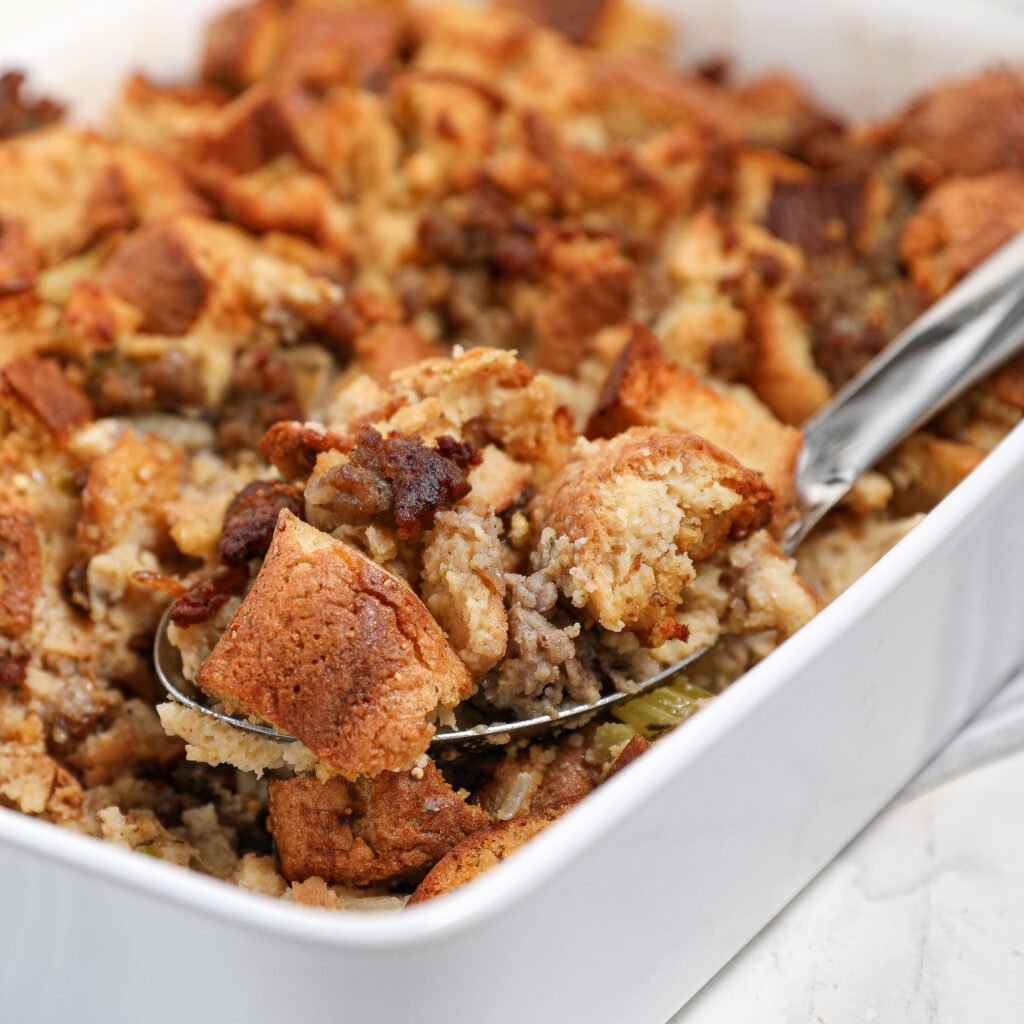
Sausage Stuffing is a must on my Thanksgiving table. This one is packed with savory sausage, onions, celery, and herbs, with a soft center and plenty of golden, crispy bread pieces on top. It’s everything I want next to turkey, mashed potatoes, and lots of gravy.
As an Amazon Associate I earn from qualifying purchases.
THIS IS THE STUFFING I WANT ON MY THANKSGIVING PLATE.
I’m a stuffing person. Give me this, mashed potatoes, turkey, and a ridiculous amount of gravy and I’m happy. And honestly, I’m probably going back for another scoop of stuffing before anything else.
For me, the best stuffing has to have both textures. I want the inside soft and full of all that savory sausage and herb flavor, but I also need those golden, slightly crispy pieces of bread across the top.

That’s actually why I cut the bread into two different sizes. Some of the pieces break down a little more and soak up all of that chicken stock, while the bigger pieces hold their shape. It gives you so much more texture than cutting everything exactly the same size.
And then there’s the sausage. I like using breakfast sausage because it already has that cozy, savory flavor that works SO well with the sage, thyme, onions, and celery. This is absolutely a Thanksgiving recipe, but I would happily eat it with roasted chicken or pork any time it’s cold outside. And leftovers with gravy the next day? Maybe even better.
I hope this one makes it onto your holiday table!

Why You’ll Love Sausage Stuffing
- Classic holiday flavor: Sausage, sage, thyme, onion, and celery give this stuffing that savory flavor you expect on a Thanksgiving table.
- The best texture: Using dried bread and cutting it into two different sizes gives you a soft, flavorful center while leaving plenty of larger pieces throughout.
- Easy to make: There’s nothing complicated here. Brown the sausage and vegetables, mix everything together, and let the oven do the rest.
- Easy to make gluten-free: Regular bread is my go-to, but you can easily make this sausage stuffing gluten-free by using your favorite gluten-free bread in the same amount.
- Perfect for a crowd: One 9×13-inch casserole makes about 10 servings, making it a great choice for Thanksgiving, Christmas, or any big family dinner.
Ingredients Needed To Make Sausage Stuffing
Make sure you scroll down to the recipe card to see the full list of ingredients needed for this recipe.
- Bread: Regular bread works perfectly here. I like cutting half into larger cubes and half into smaller cubes for more texture. If you need the stuffing gluten-free, use your favorite gluten-free bread in the same amount.
- Ground sausage: Breakfast sausage is my favorite because its seasoning pairs really well with the herbs in the stuffing.
- Eggs and egg yolks: These help bind the stuffing together while giving the center a rich, tender texture.
- Chicken stock: The dried bread absorbs the stock as the stuffing bakes. Because different breads absorb liquid differently, start with less and add more only as needed.
- Onions and celery: You can’t have classic stuffing without them. Cooking them with the sausage also gives them a chance to pick up all that extra flavor.
- Sage and thyme: These give the stuffing that classic savory holiday flavor.
- Fresh parsley: Adds freshness and a little color to all of those rich, savory ingredients.
- Kosher salt, black pepper, and garlic powder: Simple seasonings that bring everything together.
What Is the Best Bread for Sausage Stuffing?
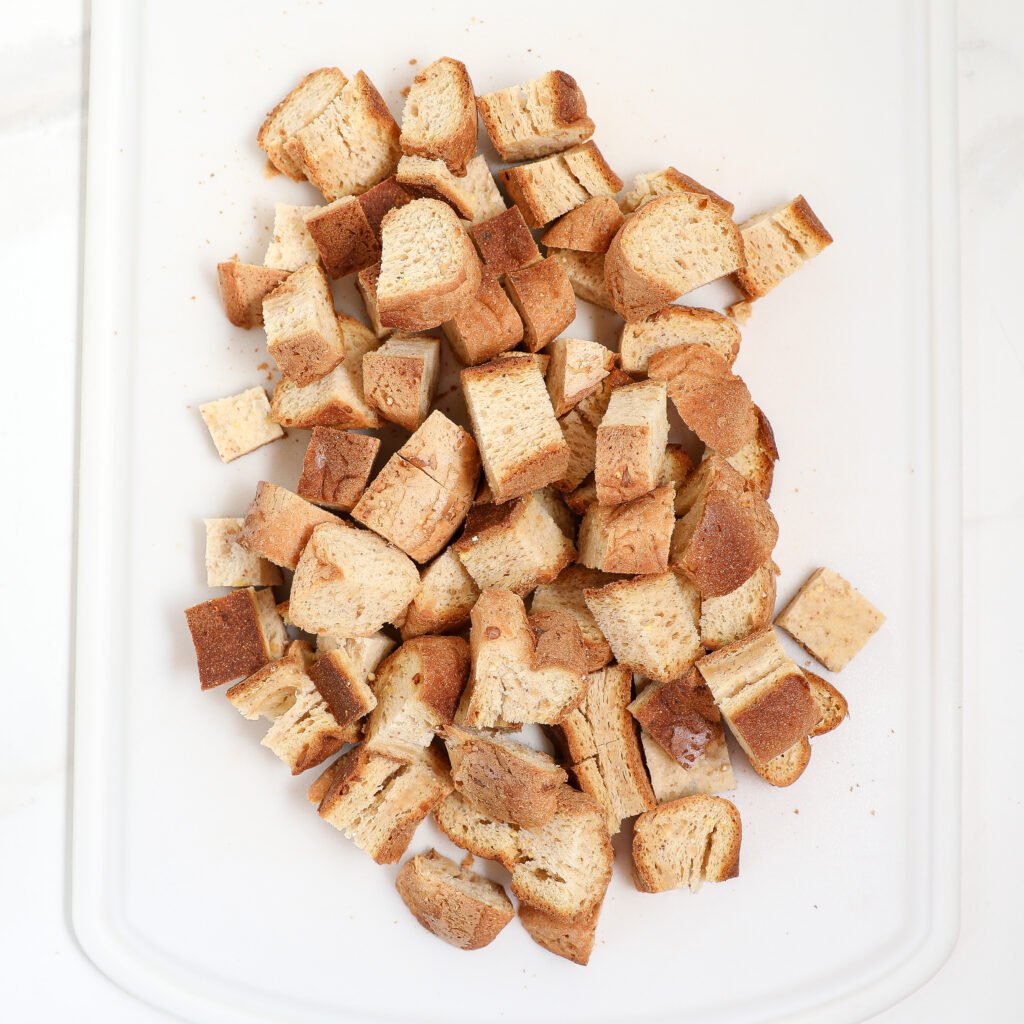
The best bread for sausage stuffing is bread that’s had a chance to dry out. You don’t want to start with really soft, moist bread because it can turn mushy once you add the stock and eggs. I cut half of the bread into approximately 2-inch cubes and the other half into 1-inch cubes, then spread everything onto baking sheets and let it sit out for a few hours. The different sizes are intentional. The smaller pieces absorb more of the stock and help everything come together, while those larger pieces give you more texture throughout the stuffing. And you don’t need a special loaf. Use a bread you enjoy and let it dry properly. If you’re making this gluten-free, simply use your favorite gluten-free bread instead. Just remember that some breads absorb more liquid than others, which is why I always recommend adding the stock gradually.
How To Make Sausage Stuffing
- Cook the sausage and vegetables: Heat a large skillet over medium heat and add the ground sausage, breaking it into crumbles as it cooks. Add the diced onions and celery and continue cooking until the sausage is browned and the onions are translucent. Remove from the heat and let the mixture cool completely.
- Make the egg mixture: In a large mixing bowl, whisk together the eggs, egg yolks, 2 1/2 cups of chicken stock, kosher salt, pepper, sage, thyme, parsley, and garlic powder.


- Add the bread: Add the dried bread cubes to the egg mixture in batches, gently folding everything together so the bread has a chance to absorb the liquid.
- Add more stock as needed: This is one of those places where you want to go by how the stuffing looks and feels. If the bread still seems dry, gradually add more chicken stock. Depending on the bread you’re using, you’ll need about 3–4 cups total


- Add the sausage mixture: Once the sausage, onions, and celery have cooled, fold them into the bread mixture until everything is evenly combined.

- Transfer to the baking dish: Spoon the stuffing into a greased 9×13-inch casserole dish and spread it into an even layer. Spray the underside of a piece of foil with nonstick cooking spray before covering the dish so none of those good pieces of bread stick to it.
- Bake: Bake according to the recipe card until the center is hot and the top is golden and lightly crisp.
Tips for the Best Sausage Stuffing
- Give the bread time to dry. This really does make a difference. Drier bread can absorb the stock and all of that flavor without immediately becoming mushy.
- Don’t add all of the stock at once. Different types of bread absorb liquid differently, especially when you’re switching between regular and gluten-free bread. Start with 2 1/2 cups and add more as needed.
- Let the sausage mixture cool. Don’t add piping-hot sausage and vegetables directly to the mixture with the raw eggs.
- Don’t overmix it. Gently fold everything together. You want those different sizes of bread cubes to stay intact instead of breaking down into one uniform mixture.
- Spray your foil. It’s such a small thing, but spray the side of the foil that will touch the stuffing. Otherwise, you risk pulling off that golden top when you uncover it.

Variations & Substitutions
- Gluten-free: This sausage stuffing is easy to make gluten-free. Replace the regular bread with your favorite gluten-free bread using the same amount. Keep an eye on the stock because gluten-free breads can absorb liquid differently.
- Sausage: I prefer breakfast sausage, but you can use mild Italian sausage if you want to change up the flavor.
- Chicken stock: Vegetable stock can be used instead of chicken stock.
- Herbs: Fresh herbs can be used in place of dried. As a general rule, use about three times the amount of fresh herbs when replacing dried herbs.
Make It Ahead
There is already enough going on in the kitchen on Thanksgiving, so anything I can get done ahead of time is a win. You can cut and dry the bread ahead of time and store it once it’s completely dry. You can also cook the sausage, onions, and celery ahead and refrigerate them in an airtight container. If you want to assemble the entire casserole ahead of time, cover it tightly and refrigerate it until you’re ready to bake. I like taking it out of the refrigerator while the oven preheats so the baking dish isn’t going straight from cold to hot.
Storage + Freezing
- Storage: Allow leftover sausage stuffing to cool, then transfer it to an airtight container and refrigerate for up to 3–4 days.
- Freezing: Sausage stuffing can also be frozen after baking. Let it cool completely, transfer it to a freezer-safe container, and freeze. Thaw it overnight in the refrigerator before reheating.
- Reheating: Reheat the stuffing covered in a 350°F oven until warmed through. If the stuffing seems a little dry, add a small splash of chicken stock before reheating. Remove the foil toward the end if you want to bring back some of that crispy texture on top.

Sausage Stuffing Recipe
Equipment
- Knife
- Nonstick spray
- foil
Ingredients
- 2 lbs bread, approximately 2 loaves, regular or gluten-free
- 1 lb sausage breakfast sausage preferred
- 3 large eggs
- 2 large egg yolks
- 3-4 cups chicken stock
- 2 onions, diced
- 2 celery ribs, diced
- 2 1/2 tsp kosher salt
- 1 tsp black pepper
- ½ tsp ground sage
- 1 tsp thyme leaves
- 1/2 cup fresh parsley, chopped (or ¼ cup dried)
- ½ tsp garlic powder
Instructions
- Cut half of the bread into approximately 2-inch cubes and the remaining half into approximately 1-inch cubes. Spread the bread cubes onto baking sheets and allow them to dry for a few hours.
- Heat a large skillet over medium heat. Add the sausage and break it into smaller crumbles as it cooks. Add the diced onions and celery and continue cooking until the sausage is browned and the onions are translucent. Remove from the heat and allow to cool completely.
- Add the eggs, egg yolks, 2 1/2 cups chicken stock, kosher salt, black pepper, sage, thyme, parsley, and garlic powder to a large mixing bowl. Whisk until combined.
- Add the dried bread cubes in batches, gently folding after each addition so the bread absorbs the liquid.
- If the mixture seems dry, gradually add additional chicken stock as needed. Depending on the bread you're using, you'll need approximately 3–4 cups total.
- Fold in the cooled sausage, onions, and celery until evenly distributed.
- Transfer the stuffing to a greased 9×13-inch casserole dish. Spray the underside of a piece of aluminum foil with nonstick cooking spray and cover the dish.
- Bake at 350°F for 45 minutes covered. Remove the foil and bake uncovered for another 5–10 minutes, until the top is golden and lightly crisp.
- Allow the stuffing to cool for about 10 minutes before serving.
Notes
- Bread: Regular bread or gluten-free bread can be used. Different breads absorb different amounts of stock, so add the stock gradually.
- Gluten-free: Substitute your favorite gluten-free bread using the same amount.
- Sausage: Breakfast sausage is my favorite, but mild Italian sausage can also be used.
- Stock: Start with 2 1/2 cups and add more as needed, up to approximately 3–4 cups total.
- Make ahead: The bread can be dried and the sausage and vegetables can be cooked ahead of time to make assembly easier.
- Storage + freezing: Store leftovers in an airtight container in the refrigerator for up to 3–4 days. Once completely cooled, the stuffing can also be frozen in a freezer-safe container.
- Reheating: Add a splash of chicken stock if needed, cover, and reheat at 350°F until warmed through. Uncover toward the end to crisp the top.
Nutrition
Frequently Asked Questions
I prefer breakfast sausage for this recipe. It already has a savory flavor that pairs really well with the sage, thyme, onions, and celery. Mild Italian sausage is another good option if that’s what you have.
Start with dried bread and don’t add all of the chicken stock at once. Add the bread in batches and give it time to absorb the liquid before deciding whether it needs more stock. The bread should be moist but not swimming in liquid.
The bread should be evenly moistened and hold together when gently pressed, but you shouldn’t have liquid pooling in the bottom of the bowl. Because different breads absorb different amounts of liquid, use the texture of the mixture as your guide rather than automatically adding all 4 cups of stock.
Yes. Use your favorite gluten-free bread in the same amount as regular bread. I’ve made stuffing with both, and they both work well. You may need to adjust the amount of stock depending on how absorbent your bread is.
Yes. You can dry the bread and cook the sausage and vegetables ahead of time, then assemble the stuffing when you’re ready to bake. You can also assemble the casserole ahead and keep it covered in the refrigerator until you’re ready to bake.
Yes. Let the cooked stuffing cool completely before transferring it to an airtight freezer-safe container. Thaw it overnight in the refrigerator and reheat it in the oven.
Traditionally, stuffing is cooked inside the turkey while dressing is baked separately in a casserole dish. But the terms are often used interchangeably, and I’ve always called this stuffing even though we’re baking it in a casserole dish.
This is made for a holiday plate. Serve it with roasted turkey or chicken, mashed potatoes, gravy, cranberry sauce, green beans, or your other favorite Thanksgiving sides.