Gingerbread Ladyfingers
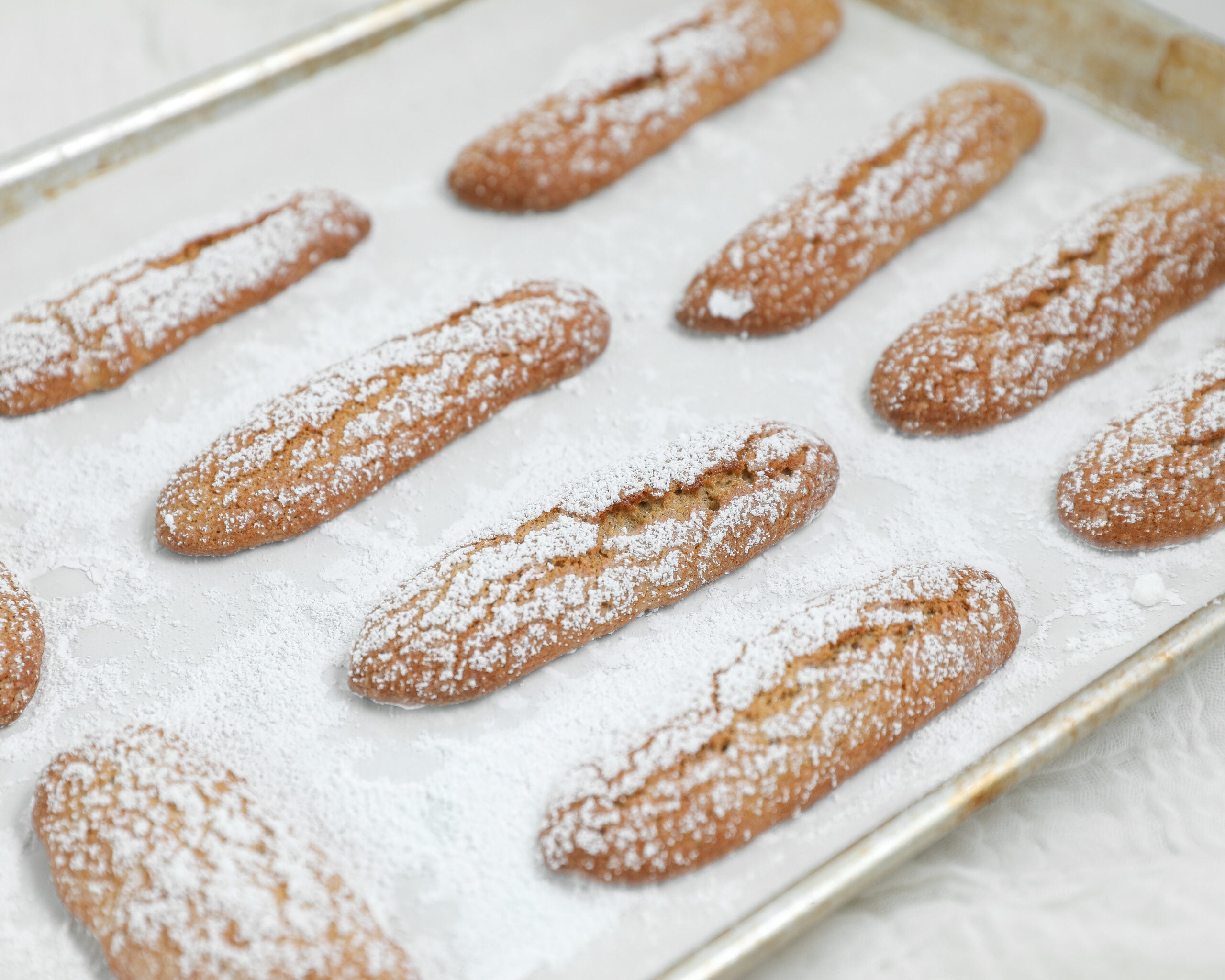
These homemade gingerbread ladyfingers have the molasses and warm spices I love in gingerbread, baked into a light sponge cookie. Ginger, cinnamon, nutmeg, allspice, and cloves flavor the batter, while a generous dusting of powdered sugar gives the tops their delicate finish. They’re lovely alongside coffee, but they also bring something a little different to a holiday tiramisu.
If you’ve never made ladyfingers from scratch, the biggest thing to pay attention to is the eggs. You’ll whip the yolks and whites separately, then gently fold everything together to keep the batter airy. After that, just pipe, dust with powdered sugar, and bake. No rolling out dough or cutting individual cookies.
As an Amazon Associate I earn from qualifying purchases.
Gingerbread Isn’t Just for Cutout Cookies
I love gingerbread at the holidays, and these ladyfingers are such a good way to get those flavors in a different cookie. They’re light, full of warm spices, and finished with powdered sugar. The molasses gives them that familiar gingerbread taste without needing frosting or anything extra. Add a cup of coffee, and I’m happy.

They’re ridiculously good on their own, but they also work beautifully in pumpkin tiramisu with the creamy filling and coffee. That’s what I like about this recipe: you can use the batch for a layered holiday dessert or simply put out a plate of cookies after dinner. Either way, they’re worth making from scratch.

Why You’ll Love These Gingerbread Ladyfingers
- Gingerbread flavor in a lighter cookie. Whipped eggs give these ladyfingers their sponge-like texture, while molasses and five spices bring the flavor.
- A homemade option for holiday tiramisu. Use them when you want a spiced variation on plain ladyfingers.
- No rolling or chilling dough. Once the batter is ready, pipe it directly onto your baking sheets.
- A simple powdered sugar finish. There’s no frosting to mix or decorating bag to refill afterward.
- A short bake. Each tray needs just 12–15 minutes in the oven.
Ingredients Needed
- Eggs: Separate the yolks and whites. Whipping them separately gives the ladyfingers their light texture.
- Granulated sugar: Divide between the yolk mixture and the whipped whites.
- Molasses: Adds that familiar gingerbread flavor.
- Vanilla extract: Complements the molasses and spices.
- Salt: Balances the sweetness.
- All-purpose flour: Gives the cookies structure.
- Cornstarch: Helps keep the texture delicate.
- Ground ginger, cinnamon, nutmeg, allspice, and cloves: This blend brings gingerbread flavor to the sponge cookies.
- Powdered sugar: Dust generously over the ladyfingers before baking.
How To Make Gingerbread Ladyfingers
- Get everything ready. Preheat the oven to 350°F, line two baking sheets with parchment paper, and fit a piping bag with a large round tip.
- Beat the yolks. Mix the egg yolks, molasses, half the sugar, vanilla, and salt on high for 3–5 minutes, until light and fluffy.
- Whip the whites. In a separate bowl, use clean, dry beaters to whip the egg whites until peaks begin to form. Then slowly add the remaining sugar and beat until glossy and firm.
- Fold gently. Fold the whites into the yolk mixture. Next, sift together the flour, cornstarch, and spices, then gently fold them into the batter.
- Pipe and dust. Pipe 4-inch-long ladyfingers, leaving about 1 inch between them. Generously dust the tops with powdered sugar.
- Bake. Bake for 12–15 minutes, until golden brown. Allow the cookies to cool completely before serving or storing.
Tips for Homemade Gingerbread Ladyfingers
- Prepare your pans first. Once the batter is ready, you’ll want to pipe and bake it promptly.
- Keep the whites free of yolk. Even a little yolk or grease can make it harder to whip them properly.
- Watch the texture of the whites. They should look glossy and hold firm peaks before you fold them into the yolks.
- Use a light hand when folding. Lift the batter from the bottom of the bowl and fold it over itself, stopping once everything is incorporated.
- Pipe similar sizes. Keeping the cookies the same length and width helps them bake evenly.
- Dip briefly for tiramisu. These homemade ladyfingers are softer than many packaged versions, so they don’t need a long soak.
Storage and Reheating
- Storage: Let the gingerbread ladyfingers cool completely, then place them in an airtight container at room temperature for up to 3 days. Separate the layers with parchment paper to prevent sticking.
- Freezing: Arrange the cooled cookies in a freezer-safe container with parchment between the layers. Freeze for up to 2 months, then thaw at room temperature before using. They may soften slightly after thawing.
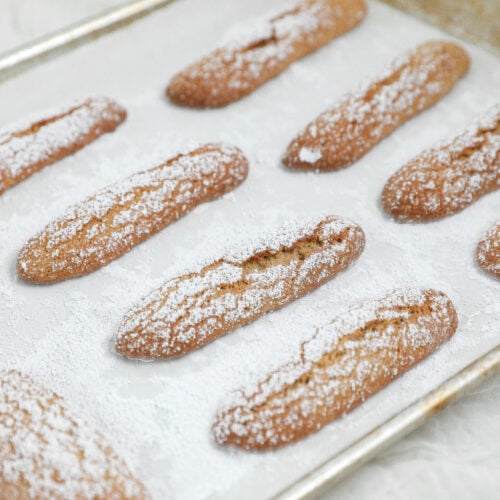
Gingerbread Ladyfingers
Equipment
- Two baking sheets
- Sifter or fine-mesh sieve
- Piping bag with a large round tip
Ingredients
- 3 eggs (separated)
- 1/2 cup granulated sugar (divided)
- 1 tablespoon molasses
- 1 teaspoon vanilla extract
- 1/2 teaspoon salt
- 1 cup all-purpose flour
- 5 teaspoons cornstarch
- 1 teaspoon ground ginger
- 1/2 teaspoon ground cinnamon
- 1/2 teaspoon ground nutmeg
- 1/4 teaspoon ground allspice
- 1/4 teaspoon ground cloves
- 1/4 cup powdered sugar
Instructions
- Preheat the oven to 350°F. Line two baking sheets with parchment paper. Fit a piping bag with a large round tip.
- In a mixing bowl, combine the egg yolks, molasses, ¼ cup of the granulated sugar, vanilla extract, and salt. Beat on high for approximately 3–5 minutes, until light and fluffy.
- In a separate bowl, using clean, dry beaters, beat the egg whites on high until peaks begin to form. Slowly add the remaining ¼ cup granulated sugar. Continue beating until the whites are glossy and hold firm peaks.
- Gently fold the whipped egg whites into the yolk mixture, keeping as much air in the batter as possible.
- Sift together the flour, cornstarch, ginger, cinnamon, nutmeg, allspice, and cloves. Add to the egg mixture and gently fold until incorporated.
- Transfer the batter to the piping bag. Pipe 4-inch-long ladyfingers onto the prepared baking sheets, leaving about 1 inch between them.
- Generously dust the tops of the piped ladyfingers with the powdered sugar.
- Bake for 12–15 minutes, until golden brown.
- Remove from the oven and allow the ladyfingers to cool completely before serving, storing, or using in tiramisu.
Notes
- Divided sugar: Use ¼ cup in the yolk mixture and ¼ cup in the egg whites.
- Whipping the whites: Keep the bowl and beaters clean, dry, and free of grease.
- Folding: Mix gently to preserve the air that gives these cookies their lift.
- For pumpkin tiramisu: Dip the cooled ladyfingers briefly in coffee rather than soaking them.
- Storage: Store completely cooled cookies in an airtight container at room temperature for up to 3 days.
- Freezing: Freeze in an airtight container with parchment between layers for up to 2 months. Thaw at room temperature.