Homemade Cream Cheese Frosting
As an Amazon Associate I earn from qualifying purchases.
THE FROSTING I ALWAYS COME BACK TO!
I love a good cream cheese frosting, especially when it has that perfect balance of sweet and tangy! I usually prefer mine a little less sweet, which is why I love being able to adjust the powdered sugar in this recipe. It’s one of my favorite frostings for my Carrot Cake and Red Velvet Cake.

When I want a softer, creamier frosting, I stick with 3 cups of powdered sugar. If I’m decorating cupcakes or need something that holds its shape better, I’ll add more. It’s also delicious on my Pineapple Carrot Cake and Lemon Blueberry Layer Cake. I love having one frosting recipe that works for so many different desserts!

Why You’ll Love This Cream Cheese Frosting
- Perfectly sweet and tangy: The cream cheese adds just the right amount of tanginess without making the frosting overly sweet.
- Easy to make: Just a handful of ingredients and a mixer are all you need!
- Adjustable sweetness: Use 3 cups of powdered sugar for a lighter, less sweet frosting or up to 5 cups for a firmer consistency.
- Smooth and creamy: Butter and heavy cream give this frosting a rich, fluffy texture that’s easy to spread.
- Great for cakes and cupcakes: Spread it between cake layers, frost a sheet cake, or pipe it onto cupcakes.
- Easy to make ahead: Prepare the frosting in advance and refrigerate it until you’re ready to decorate.
Ingredients Needed To Banana Bread Coffee Cake
- Cream Cheese: Use full-fat, brick-style cream cheese for the best flavor and consistency. Avoid whipped or spreadable cream cheese from a tub, which can make the frosting too soft.
- Unsalted Butter: Adds richness and helps create a smooth, fluffy frosting. Let it soften to room temperature so it blends easily with the cream cheese.
- Powdered Sugar: Sweetens and thickens the frosting. You can adjust the amount depending on whether you prefer a softer frosting for spreading or a firmer consistency for piping.
- Vanilla Extract: Adds a warm vanilla flavor that complements the tanginess of the cream cheese.
- Heavy Cream: Helps whip the frosting into a light, creamy consistency. You can substitute milk if needed, although heavy cream gives it a richer texture.
How to Make Cream Cheese Frosting
- Whip the Cream Cheese and Butter: Add the room-temperature cream cheese and unsalted butter to a large mixing bowl or the bowl of a stand mixer fitted with the whisk attachment. Beat on high speed until the mixture looks light, fluffy, and completely smooth. Stop occasionally to scrape down the sides and bottom of the bowl so everything mixes evenly.
- Add the Vanilla and Heavy Cream: Pour in the vanilla extract and heavy cream. Continue mixing until everything combines and the frosting has a smooth, creamy texture. If you’re using milk instead of heavy cream, add it as directed in the recipe.
- Mix in the Powdered Sugar: Reduce the mixer speed to low and gradually add the powdered sugar, about 1 cup at a time. Start with 3 cups for a softer, tangier frosting that’s easy to spread over cakes. For a thicker frosting that holds its shape better when piping, gradually increase the powdered sugar to 5 cups. Scrape down the bowl between additions to make sure the frosting mixes evenly.
- Whip Until Smooth and Fluffy: Once you’ve added your desired amount of powdered sugar, increase the mixer speed and whip until the frosting looks smooth, light, and fluffy. Avoid mixing longer than necessary, especially if the frosting starts to soften.
- Adjust the Consistency and Frost: Check the consistency before decorating. If the frosting feels too soft for piping, refrigerate it for about 30 minutes to help it firm up.
- Once it reaches your preferred consistency, spread it over a completely cooled cake or transfer it to a piping bag to decorate cupcakes.
Tips for the Best Cream Cheese Frosting
- Use full-fat cream cheese: Brick-style cream cheese gives the frosting a thicker, creamier consistency. Spreadable cream cheese from a tub contains more moisture and can make the frosting runny.
- Start with room-temperature ingredients: Let the cream cheese and butter soften before mixing. They should feel soft enough to blend easily but not warm or melted.
- Sift the powdered sugar: If your powdered sugar has lumps, sift it before adding it to the frosting. This helps create a smoother texture.
- Add the powdered sugar gradually: Start with 3 cups and increase as needed. Taste and check the consistency before adding more, especially if you prefer a tangier frosting.
- Avoid overmixing: Whip the cream cheese and butter until light and smooth, but don’t continue beating unnecessarily once everything comes together. Overmixing can make cream cheese frosting too soft.
- Chill before piping: If the frosting feels too soft to hold its shape, refrigerate it for about 30 minutes before transferring it to a piping bag.
- Cool your cakes completely: Even slightly warm cake layers or cupcakes can cause cream cheese frosting to soften and slide off.
How to Store and Freeze Cream Cheese Frosting
- Storing Cream Cheese Frosting: Store leftover cream cheese frosting in an airtight container in the refrigerator for up to 5 days. Since this frosting contains cream cheese and heavy cream, it needs to stay refrigerated when you’re not using it. When you’re ready to frost your cake or cupcakes, remove the frosting from the refrigerator and let it sit at room temperature for about 15–30 minutes, or until it’s soft enough to spread. Give it a quick stir to restore its smooth, creamy consistency.
- Can You Freeze Cream Cheese Frosting? Yes! You can freeze homemade cream cheese frosting for up to 3 months. Transfer it to a freezer-safe, airtight container, leaving a little room at the top. Make sure to label the container with the date. When you’re ready to use it, thaw the frosting overnight in the refrigerator. Once thawed, let it soften slightly at room temperature, then stir or briefly whip it with a mixer until smooth. The texture may change slightly after freezing, but mixing can help bring back its creamy consistency.
- Storing Cakes and Cupcakes with Cream Cheese Frosting: Once you’ve frosted your cake or cupcakes, store them covered in the refrigerator. For the best texture and flavor, let them sit at room temperature briefly before serving so the frosting has time to soften. Avoid leaving cream cheese frosting or frosted desserts at room temperature for more than 2 hours.
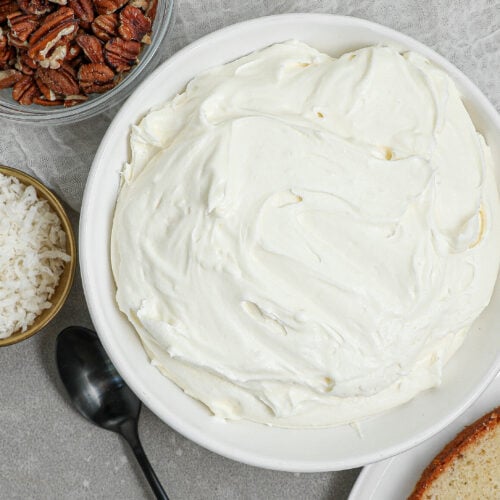
Homemade Cream Cheese Frosting
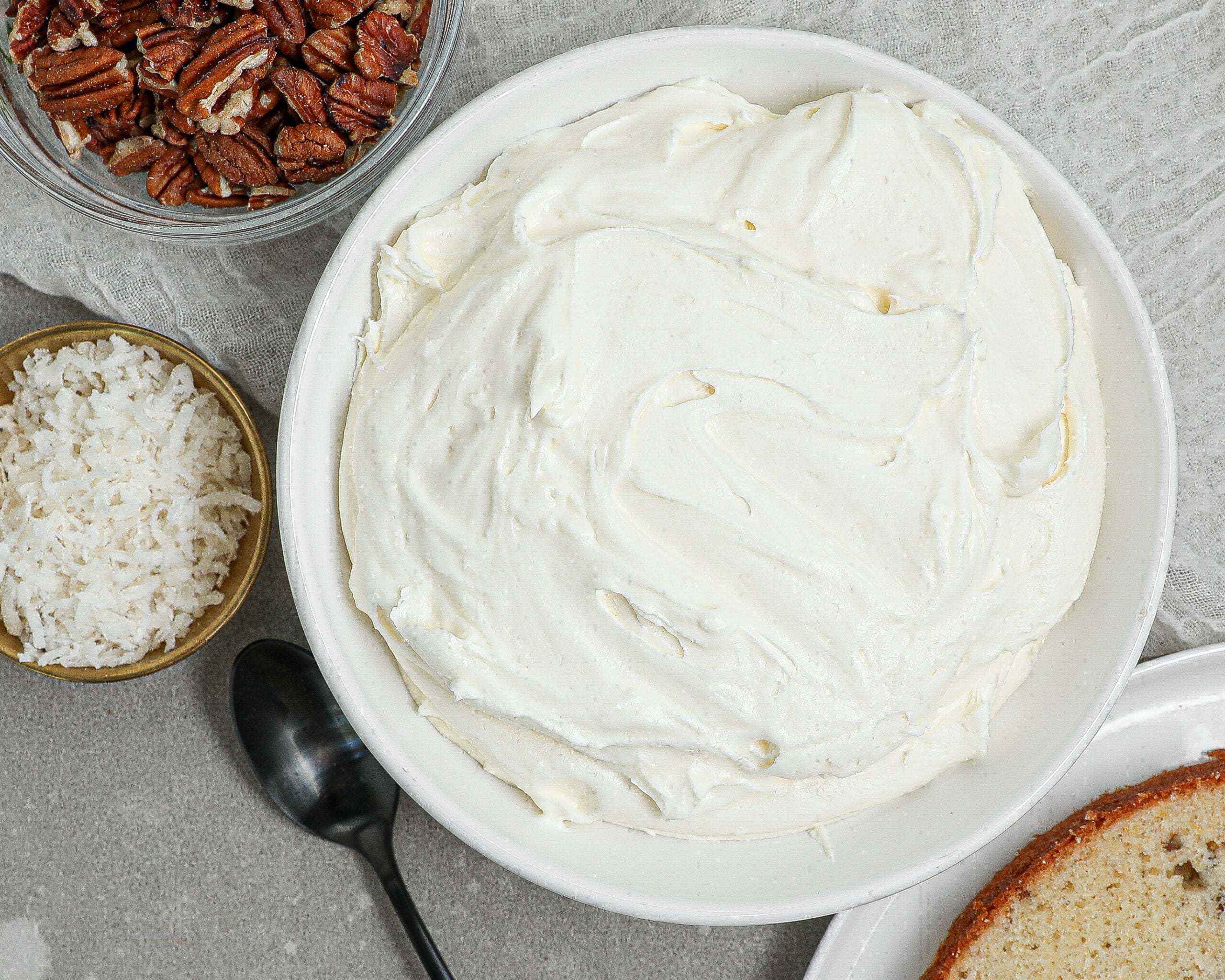
This homemade Cream Cheese Frosting is rich, smooth, and perfectly tangy! Made with cream cheese, butter, powdered sugar, vanilla, and heavy cream, it's easy to whip up and customize. Use less powdered sugar for a soft, creamy frosting or more for a firmer consistency that's great for piping onto cakes and cupcakes.
Equipment
- Stand mixer or electric hand mixer
- Whisk attachment
- Piping bag and decorating tip (optional)
Ingredients
- 16 oz cream cheese (room temperature)
- 16 tbsp unsalted butter (room temperature)
- 3 –5 cups powdered sugar (see notes)
- 2 tsp vanilla extract
- ⅓ cup heavy cream (substitute milk)
Instructions
- Whip the cream cheese and butter. Add the room-temperature cream cheese and butter to a large mixing bowl or stand mixer fitted with the whisk attachment. Beat on high speed until light, fluffy, and smooth. Scrape down the sides of the bowl as needed.
- Add the vanilla and heavy cream. Pour in the vanilla extract and heavy cream. Mix until combined.
- Add the powdered sugar. Reduce the mixer speed to low and gradually add the powdered sugar, about 1 cup at a time. Start with 3 cups for a softer, less sweet frosting. For a thicker frosting that's better suited for piping, gradually increase to 5 cups.
- Whip until smooth. Once you've added your desired amount of powdered sugar, mix until the frosting is smooth and creamy. Scrape down the bowl to make sure everything combines evenly.
- Adjust and use. If the frosting is too soft for piping, refrigerate it for about 30 minutes to help it firm up. Spread over completely cooled cakes or transfer to a piping bag to decorate cupcakes.
Notes
- For a softer frosting: Use 3 cups of powdered sugar for a creamy, lighter frosting with a more noticeable cream cheese flavor. This consistency works best for spreading rather than piping.
- For piping: Use up to 5 cups of powdered sugar for a firmer frosting that holds its shape better.
- If the frosting is too soft: Refrigerate it for about 30 minutes before piping.
- Cream cheese: Full-fat, brick-style cream cheese gives the most reliable consistency.
- Heavy cream substitute: You can use milk instead of heavy cream. Add it gradually if needed to avoid thinning the frosting too much.
- Storage: Refrigerate in an airtight container for up to 5 days or freeze for up to 3 months. Thaw frozen frosting overnight in the refrigerator before using.
Nutrition
Serving: 1servingCalories: 309kcalCarbohydrates: 25gProtein: 2gFat: 23gSugar: 23g
Tried this recipe?Mention @TheSaltyCooker or tag #thesaltycooker!