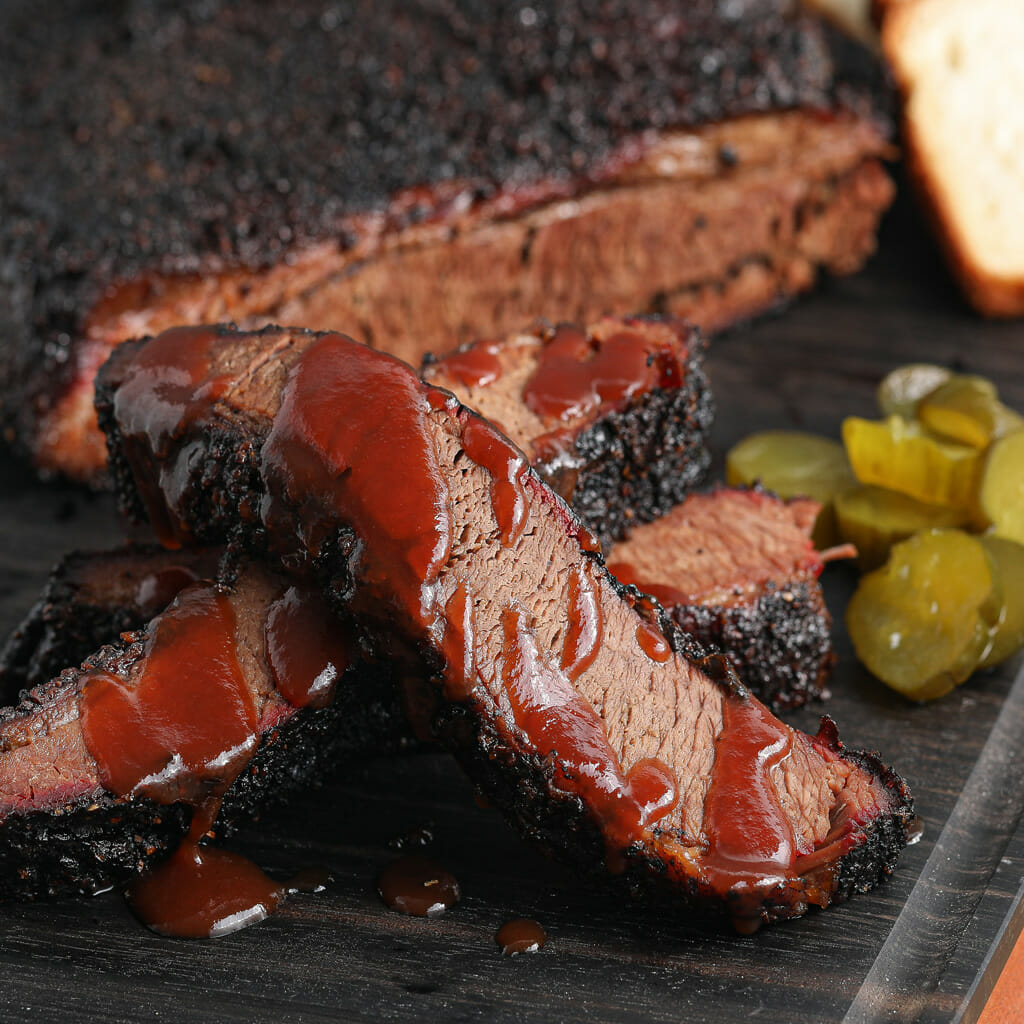
Learn how to make Texas style smoked brisket with kosher salt, coarse black pepper, and granulated garlic. This step-by-step smoked brisket recipe covers trimming, seasoning, smoking, wrapping, resting, and slicing for tender brisket with a rich bark and classic Texas barbecue flavor.
Texas style smoked brisket is one of the most iconic barbecue recipes in America. When it’s cooked low and slow, brisket develops a deep, flavorful bark while staying tender and juicy inside. This recipe uses a simple combination of kosher salt, coarse black pepper, and granulated garlic to let the beef and smoke flavor shine. Whether you’re smoking your first brisket or looking to improve your Texas barbecue skills, this guide walks you through trimming, seasoning, smoking, wrapping, resting, and slicing for consistently great results.
As an Amazon Associate I earn from qualifying purchases.
The first thing I wanted to cook when we bought our smoker was brisket. There is just something about spending the day outside, checking on the smoker, and watching that bark slowly develop that feels like barbecue at its best. Brisket isn’t difficult, but it does require patience. Once I learned that the secret wasn’t fancy ingredients or complicated techniques, but simply giving the meat enough time, everything started to click.
Now it’s one of my favorite things to cook for family gatherings, holidays, and backyard cookouts because nothing gets people excited quite like seeing a whole brisket come off the smoker.
Ingredients Needed To Make Texas Style Smoked Brisket
Whole Brisket: Look for a USDA Choice or Prime brisket with good marbling throughout the flat. A brisket that bends easily in the package usually cooks more evenly.
Kosher Salt: Provides the foundation of Texas-style brisket seasoning while helping develop a flavorful bark.
Coarse Black Pepper: One of the signature flavors of traditional Texas barbecue. Coarse pepper creates texture and contributes to bark formation.
Granulated Garlic: Adds savory depth without overpowering the natural beef flavor.
How To Choose A Brisket
When shopping for brisket, look for:
Good marbling throughout the flat
Flexible brisket that bends easily
Even thickness from end to end
USDA Choice or Prime when available
A brisket between 10 and 14 pounds for easier handling
How To Trim A Brisket
Proper trimming helps the brisket cook more evenly.
Remove hard exterior fat
Leave about ¼ inch of fat cap
Round sharp corners
Remove thin pieces that may burn
Why Texas Brisket Uses Simple Seasoning
Traditional Texas brisket is all about letting the beef shine.
Unlike heavily seasoned barbecue recipes, Texas-style brisket relies on simple ingredients like salt, pepper, and garlic to enhance the natural flavor of the meat while allowing the smoke and bark to do the rest of the work.
What Is The Brisket Stall?
One of the most common questions new pitmasters ask is why their brisket seems stuck around 160°F.
This is called the stall.
As moisture evaporates from the surface of the brisket, it cools the meat at nearly the same rate the smoker is heating it.
This is completely normal and happens with almost every brisket.
When Should You Wrap Brisket?
Wrap the brisket when:
Internal temperature reaches approximately 165°F
The bark looks dark and set
The seasoning no longer rubs off when touched
Butcher paper is the traditional choice because it protects the brisket while preserving bark texture.
How To Know When Brisket Is Done
Temperature is helpful, but tenderness is more important.
Most briskets finish between 200°F and 205°F.
The brisket is ready when a probe slides into the meat with almost no resistance. Think like cutting through butter.
How To Rest Brisket
Resting is one of the most important parts of the entire process.
Allow the brisket to rest for at least one hour before slicing.
For even better results, hold it wrapped in a cooler for 2 to 4 hours.
This helps the juices redistribute throughout the meat.
How To Slice Brisket
Always slice against the grain.
The flat and point muscles run in different directions, so separate them if necessary before slicing.
Thin slices work best for the flat while slightly thicker slices work well for the point.
Texas style smoked brisket seasoned with kosher salt, coarse black pepper, and garlic, then smoked low and slow until tender with a rich bark and juicy slices. This step-by-step brisket recipe covers trimming, seasoning, smoking, wrapping, resting, and slicing for authentic Texas barbecue at home.
Remove the brisket from the refrigerator while preparing the smoker.
Trim excess hard fat, leaving approximately 1/4 inch of the fat cap in place.
Pat the brisket dry with paper towels.
Season the Brisket
In a small bowl, combine the kosher salt, coarse black pepper, and granulated garlic.
Season all sides of the brisket generously, including the edges.
Allow the brisket to sit while the smoker preheats.
Preheat the Smoker
Preheat your smoker to 225°F.
Once the smoker reaches temperature, place the brisket directly on the grates with the fat cap facing up or according to your smoker manufacturer's recommendation.
Smoke the Brisket
Smoke the brisket for approximately 8 to 10 hours.
Continue cooking until the internal temperature reaches about 165°F and the bark is dark and firmly set. (The seasoning should not rub off when lightly touched.)
Wrap the Brisket
Place the brisket on a large sheet of butcher paper.
Wrap tightly and return it to the smoker.
Continue cooking for another 4 to 6 hours.
Check for Doneness
Begin checking for tenderness once the brisket reaches 200°F.
The brisket is finished when a thermometer probe slides into the meat with very little resistance. Most briskets finish between 200°F and 205°F.
Rest the Brisket
Remove the brisket from the smoker. Keep it wrapped and allow it to rest for at least 1 hour before slicing. (Resting allows the juices to redistribute throughout the meat.)
Slice and Serve
Slice against the grain. Serve immediately with your favorite barbecue sides.
Notes
Choose a well-marbled brisket.: The more marbling throughout the flat, the more tender and flavorful your finished brisket will be.
Don’t cook strictly by temperature: Start checking for tenderness around 200°F, but rely on probe tenderness rather than a specific number.
Wrap only after the bark is set: If the seasoning still rubs off when touched, give it more time before wrapping.
Allow plenty of rest time: A rested brisket slices cleaner and retains more moisture.
Slice against the grain: This is one of the biggest factors in creating tender slices.
A whole packer brisket is the best choice because it includes both the flat and point muscles. Look for USDA Choice or Prime brisket with visible marbling throughout the meat.
Why is my brisket tough?
Brisket is usually tough because it hasn’t cooked long enough. Even if it reaches the target temperature, the connective tissue still needs time to break down. Continue cooking until a probe slides in with very little resistance.
Should I wrap brisket in butcher paper or foil?
Butcher paper is the traditional Texas barbecue method. It protects the brisket during the stall while preserving the bark. Foil cooks faster but can soften the bark.
How long should brisket rest before slicing?
Allow the brisket to rest for at least one hour. For even better results, hold it wrapped in a cooler or warm oven for two to four hours before slicing.
Can I make brisket on a pellet smoker?
Absolutely. Pellet smokers are one of the easiest ways to make Texas style brisket because they maintain a consistent temperature throughout the cook.
What wood is best for Texas brisket?
Post oak is the traditional Texas choice, but oak, hickory, pecan, and mesquite also work well depending on the flavor profile you prefer.