
How Peak Brain Institute Neurofeedback Helped My Anxiety, Sleep, and Panic Response
If you struggle with anxiety, social anxiety, racing thoughts, migraines, sleep issues, or feeling stuck in fight-or-flight mode, neurofeedback may be something worth exploring.
I discovered Dr. Andrew Hill from Peak Brain Institute after hearing him on the Acid for Squares podcast. What he explained about the brain completely reframed how I think about anxiety.
He described the brain like a muscle. When certain areas are overused, they keep firing. Over time, those stress pathways become automatic.
If your nervous system has been stuck in fight-or-flight mode for years, it does not simply calm down because you try to think differently.
That was exactly my situation.
As an Amazon Associate I earn from qualifying purchases.
Stuck in Fight-or-Flight Mode
For a long time, my nervous system felt like it was constantly on alert. In certain situations, a panic response would hit so quickly that before I could rationalize it or remind myself I was safe, my body was already in full flight mode.
It wasn’t logical.
It was neurological.
That realization is what led me to try neurofeedback for anxiety at Peak Brain Institute.
What Is Peak Brain Institute?
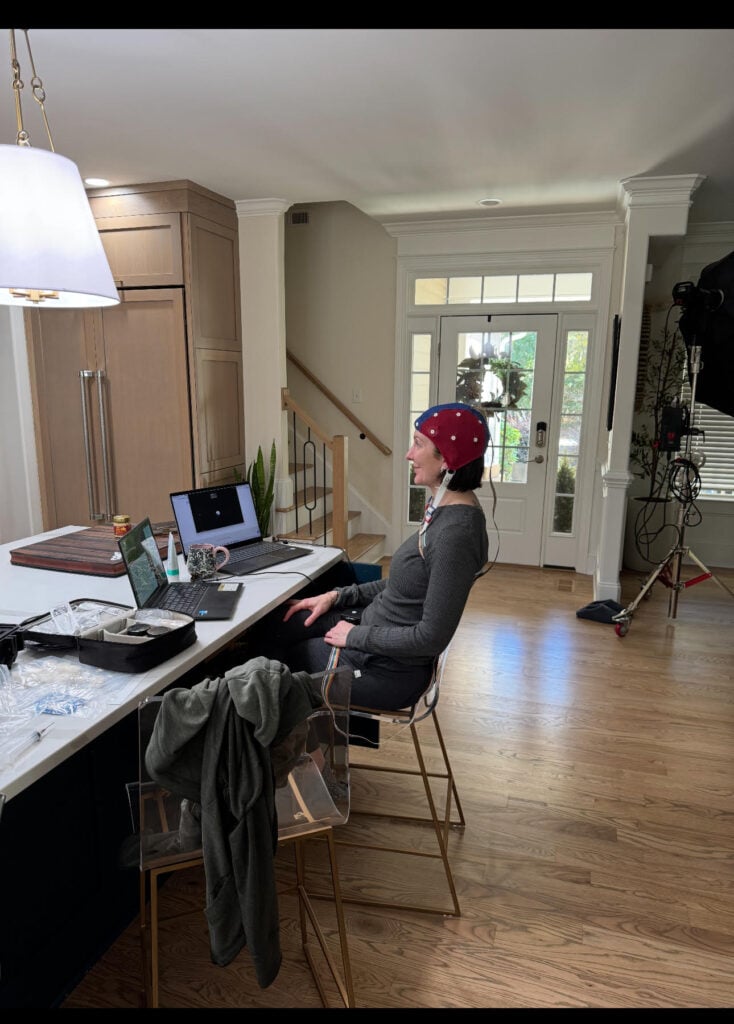
Peak Brain Institute specializes in qEEG brain mapping and neurofeedback training. Instead of guessing what may be happening in your brain, they measure it first.
The process begins with a remote qEEG brain scan.
They ship the equipment directly to your home. You schedule a time, and a technician walks you through setup over FaceTime. It is surprisingly simple and easy to do.
During the brain mapping session, they run several tests that measure your brain activity and identify patterns contributing to things like:
- Anxiety
- Sleep disruption
- Emotional reactivity
- Cognitive overload
After the brain mapping session, you meet with Dr. Andrew Hill to review your results.
This part surprised me the most.
He brought up patterns that I never mentioned in my intake paperwork, including:
- Sensitivity to chewing and scraping teeth sounds
- My brain feeling like it is moving too fast
- Trouble finding words
- Sleep issues
- Migraines
- Social anxiety response
The accuracy felt incredibly precise.
Even better, the plan was structured. Instead of trying to fix everything at once, we targeted one issue at a time.
How Remote Neurofeedback Works
Neurofeedback sounds complicated, but the process is actually very simple.
You place small electrodes on specific areas of your scalp. Then you watch a screen that looks like a simple video game while listening to feedback tones.
Your brain receives real-time EEG feedback and gradually begins learning how to regulate itself.
Each session lasts about 45 minutes, and you train about three times per week.
That’s it.
No reliving trauma.
No medication changes.
No talk therapy required.
Just structured brain training for anxiety and nervous system regulation.
My Neurofeedback Results Week by Week
One of the most interesting parts of the process was seeing how quickly my brain started responding to the training.
Week 1
I noticed a shift almost immediately. I felt noticeably happier, and my overall energy improved.
Week 2
My sleep started improving, and I felt slightly less reactive to eating sounds that usually triggered sensory irritation.
Week 3
This was the real breakthrough.
In social situations, my panic response became delayed.
Instead of my body immediately going into fight-or-flight, there was suddenly a pause. A moment where I could realize that I was safe before the reaction took over.
That pause changed everything.
After One Month of Neurofeedback at Peak Brain Institute
After four weeks of neurofeedback training, the improvements became very noticeable.
I experienced:
- Fewer headaches
- More stable mood
- Reduced social anxiety symptoms
- Lower emotional reactivity
- Better sleep quality
There were still occasional off days, because life does not magically become perfect. But the overall shift was undeniable.
I continued for additional months to work on deeper areas like meditation ability and nervous system resilience.
Even Joe ended up signing up to work on frustration and emotional reactivity.
Apparently calmer brains are contagious.
Does Neurofeedback Work for Anxiety?
In my experience, yes.
But here is the important distinction.
Neurofeedback does not suppress anxiety.
It re-trains the brain patterns that create anxiety.
When your fight-or-flight response has been firing for years, cognitive techniques alone may not fully reset those patterns. Neurofeedback works at the neurological level, helping the brain build healthier regulation pathways.
Why I Recommend Peak Brain Institute
Several things stood out about working with Peak Brain Institute.
- Remote neurofeedback available nationwide
- Personalized qEEG brain mapping
- Data-driven neurofeedback protocols
- Ongoing coaching during sessions
- Structured and measurable progress
- Slack support channel for questions
For me, this has been a complete game changer for anxiety and nervous system regulation.
If you struggle with anxiety, panic response, social anxiety, migraines, sleep issues, or nervous system dysregulation, neurofeedback may be worth researching.
If you decide to explore it, reach out to Peak Brain Institute and tell them Danielle Cochran referred you. She does receive bonus sessions when people sign up, which she appreciates because she genuinely loves the program.
Frequently Asked Questions About Neurofeedback
What is neurofeedback?
Neurofeedback is a form of brain training that uses real-time EEG feedback to help the brain regulate its activity. It is commonly used for anxiety, ADHD, sleep problems, migraines, and emotional regulation.
Does neurofeedback work for anxiety?
Many people use neurofeedback for anxiety and fight-or-flight regulation. It works by retraining overactive stress circuits in the brain rather than simply masking symptoms.
What is a qEEG brain map?
A qEEG brain map (quantitative EEG) measures electrical activity in different regions of the brain. It helps identify areas that may be overactive or underactive, which allows practitioners to create a targeted neurofeedback training plan.
Can neurofeedback be done remotely?
Yes. Peak Brain Institute offers remote neurofeedback training. Equipment is shipped directly to your home and sessions are guided virtually.
How long does neurofeedback take to work?
Some people notice improvements within a few weeks. In my case, I saw noticeable changes within the first week, with more significant improvements by weeks three and four.