Homemade Chicken Bone Broth (Using leftover chicken bones!)
As an Amazon Associate I earn from qualifying purchases.
The Broth I Always Make After Roasting a Chicken
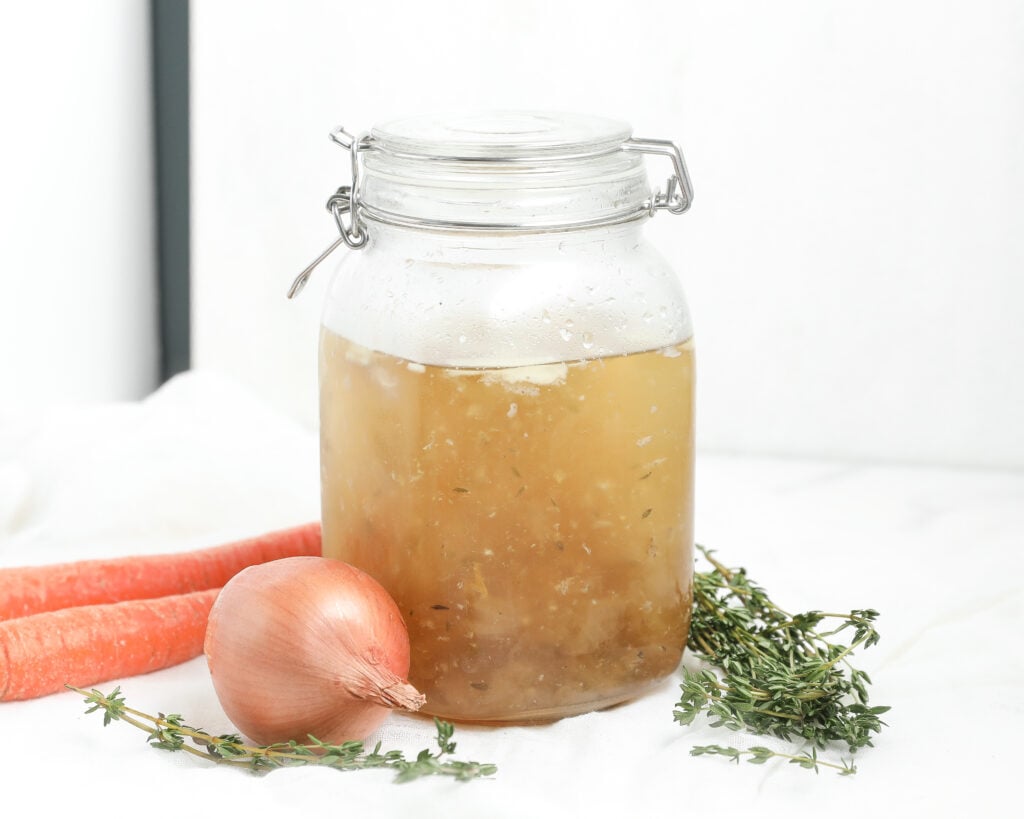
A leftover chicken carcass, a handful of vegetables, herbs, and time on the stove transform into a broth with real body and depth. The apple cider vinegar helps pull flavor and collagen from the bones, while the vegetables and herbs round everything out without overpowering the broth itself.
Here’s how it comes together:
- Add the chicken carcass, vegetables, herbs, vinegar, seasoning, and water to a large pot
- Bring everything to a gentle simmer
- Let it cook low and slow, checking the water level as it reduces
- Allow the broth to cool, then strain and discard the solids
- Store or freeze for future use

As it simmers, the broth gradually turns a soft beige color and develops a fuller mouthfeel. The long cook extracts gelatin from the bones, which gives the broth structure and richness once cooled. If you include the optional shiitake mushroom powder, it adds a subtle savory depth without making the broth taste mushroom-forward.
This broth works just as well for sipping as it does for cooking. Use it as a base for soups, stews, risotto, grains, or sauces. Once you have it on hand, it becomes one of those ingredients you reach for constantly.

Chicken Bone Broth
Equipment
- sharp knife
- Measuring spoons
- fine mesh strainer
- Large bowl or container for straining
- Storage containers for refrigerator or freezer
Video
Ingredients
- 1 chicken carcass meat removed
- 1 tablespoon shiitake mushroom powder optional
- 2 tablespoons apple cider vinegar
- 2 celery stalks roughly chopped
- 2 carrots roughly chopped
- 2 bay leaves
- 2 teaspoons kosher salt
- ½ teaspoon ground black pepper
- 3 to 4 sprigs fresh herbs such as thyme sage, or rosemary
- 1 large onion quartered
- 1 whole garlic head sliced in half to expose cloves
- Water enough to cover ingredients
Instructions
- Add the chicken carcass, vegetables, herbs, seasoning, vinegar, and optional mushroom powder to a large stock pot. Pour in enough water to fully cover the ingredients.
- Place the pot over medium low heat and bring to a gentle simmer. Cook for 3 to 4 hours. The broth should deepen in color and become a light beige. As it cooks, check the water level and add more as needed to keep the liquid about halfway up the pot.
- After 3 to 4 hours, turn off the heat and let the broth cool to room temperature. Strain the liquid through a fine mesh strainer into a bowl or container. Discard the solids.