
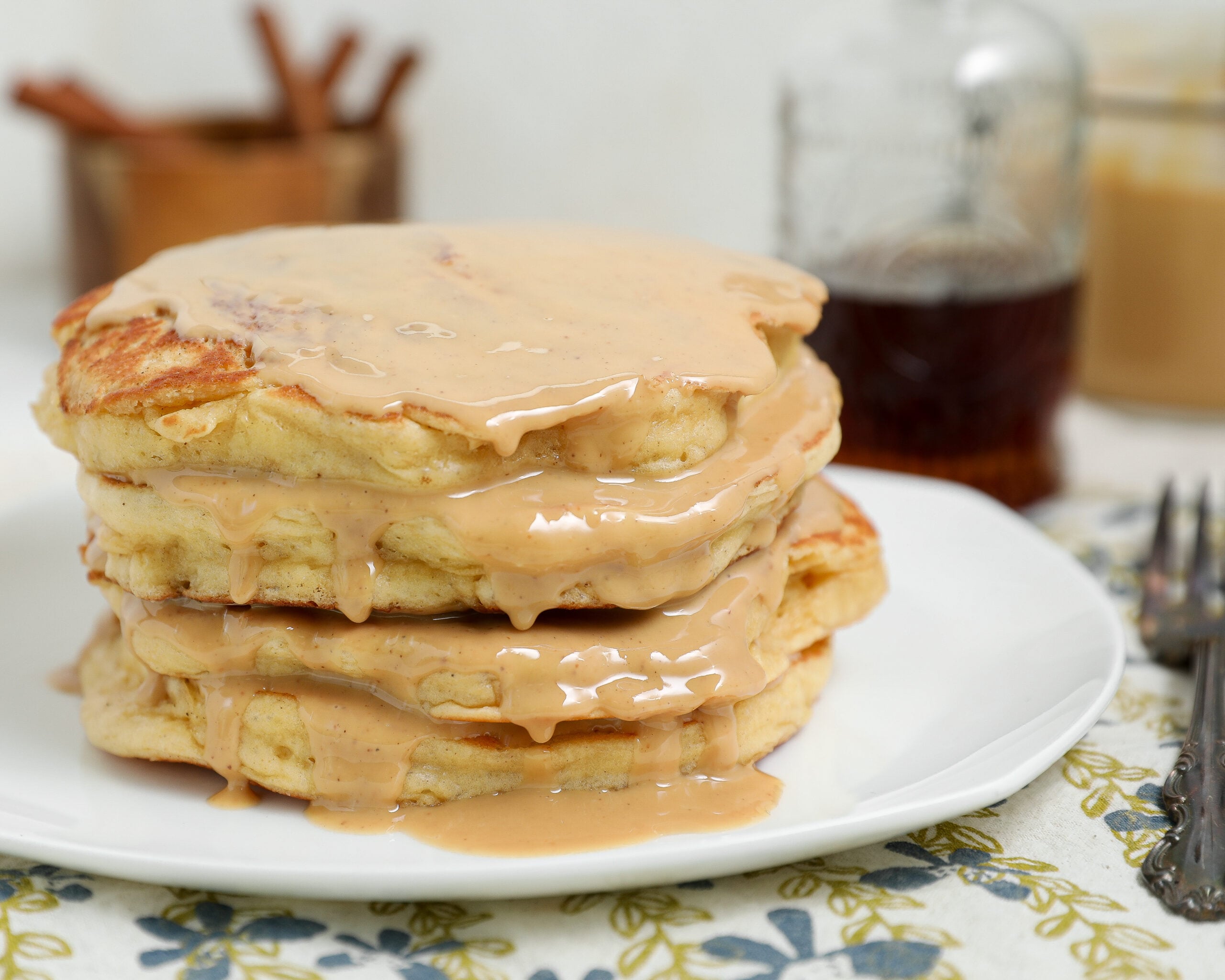
Cottage Cheese Peanut Butter Pancakes
As an Amazon Associate I earn from qualifying purchases.
A Little Note From My Kitchen
Pancakes are a weekend tradition at our house. Joe is usually the one standing at the griddle while I get everything else ready, and there’s just something about waking up to the smell of pancakes that makes the whole house feel cozy.

I’d made cottage cheese pancakes before because I loved the idea of adding a little extra protein, but honestly, I always thought they were missing something. They were soft, but the flavor just wasn’t there. Adding peanut butter completely changed that. These are fluffy, rich, and have just enough peanut butter flavor without being overwhelming. They’ve officially earned a permanent spot in our weekend breakfast rotation.

Why You’ll Love This Recipe
- Soft, fluffy pancakes with rich peanut butter flavor.
- Cottage cheese adds protein and keeps them incredibly tender.
- The blender does all the hard work, creating an incredibly smooth pancake batter in minutes.
- Great for meal prep and freezing.
- Kid-approved and perfect for busy mornings or lazy weekends.
- Delicious with maple syrup, sliced bananas, or extra peanut butter.
Ingredients Needed To Make vCottage Cheese Peanut Butter Pancakes
- All-Purpose Flour: Gives the pancakes a soft, fluffy texture. Whole wheat flour also works if you’d like a heartier pancake.
- Baking Powder: Helps the pancakes rise and creates a light, fluffy texture.
- Kosher Salt: Balances the sweetness and enhances the peanut butter flavor.
- Eggs: Bind the batter together while adding structure and richness.
- Cottage Cheese: Adds moisture, protein, and creates incredibly tender pancakes without an overpowering cottage cheese flavor.
- Milk: Helps thin the batter just enough while keeping it rich and creamy.
- Peanut Butter: Adds creamy, nutty flavor throughout every bite.
- Vanilla Extract: Brings warmth and enhances the peanut butter.
- Maple Syrup: Adds just a touch of sweetness to the batter.
- Ground Cinnamon: Gives these pancakes a subtle warmth that pairs perfectly with peanut butter.
- For Serving: Extra peanut butter and warm maple syrup.
Helpful Ingredient Tips
- Full-fat or low-fat cottage cheese both work well.
- Creamy peanut butter creates the smoothest blender pancake batter.
- Natural peanut butter can be used, but stir it well before measuring.
- Don’t substitute baking soda for baking powder.
How To Make Cottage Cheese Peanut Butter Pancakes
- Add the eggs, cottage cheese, milk, vanilla extract, cinnamon, peanut butter, and maple syrup to a blender. Blend until completely smooth and creamy.
- In a large mixing bowl, whisk together the flour, baking powder, and kosher salt until well combined.
- Pour the blended mixture into the bowl with the dry ingredients. Stir gently until everything is just combined. A few small lumps are perfectly fine. Avoid overmixing, as this can make the pancakes less fluffy.
- Let the batter rest for about 5 minutes while your skillet heats. This gives the baking powder time to activate and helps the pancakes cook up light and tender.
- Heat an electric griddle or a large nonstick skillet over medium-low heat. Lightly butter the cooking surface.
- Using about ½ cup of batter for each pancake, spoon the batter onto the skillet. Since the batter is thicker than traditional pancake batter, gently spread it into a circle with the back of a spoon.
- Cook for 3 to 4 minutes, or until bubbles begin forming around the edges and the bottoms are golden brown. Carefully flip and cook for another 3 to 4 minutes, until cooked through.
- Serve warm with extra peanut butter and maple syrup.
Tips
- Let the batter rest for 5 minutes before cooking for fluffier pancakes.
- Cook these protein pancakes over medium-low heat so the centers cook through before the outsides brown. These pancakes are thicker than traditional pancakes, so lower heat helps them cook evenly without burning.
- Resist the urge to flatten them too much. A little thickness keeps them soft and fluffy.
- Don’t overmix the batter after adding the flour. Stir just until combined.
- Butter the skillet between batches for beautifully golden pancakes.
- If your peanut butter is stored in the refrigerator, let it come to room temperature so it blends more easily.
Variations
- Add Chocolate Chips: Stir mini chocolate chips into the batter for a peanut butter cup-inspired breakfast.
- Top with Bananas: Fresh banana slices pair perfectly with the peanut butter flavor.
- Use Whole Wheat Flour: Substitute whole wheat flour for a heartier pancake with a slightly nuttier flavor.
- Add Chopped Peanuts: Sprinkle chopped roasted peanuts over the finished pancakes for extra crunch.
- Try Different Nut Butters: Almond butter or cashew butter also work well if you’d like to change the flavor.
What to Serve with Cottage Cheese Peanut Butter Pancakes
These pancakes are hearty enough to enjoy on their own, but they pair wonderfully with your favorite breakfast sides.
- Crispy bacon
- Breakfast sausage
- Fresh berries
- Sliced bananas
- Scrambled eggs
- Homemade whipped cream
- Warm maple syrup
- Extra peanut butter
- Greek yogurt
- A hot cup of coffee or an iced latte
Storage & Freezing
- Refrigerator: These Cottage Cheese Peanut Butter Pancakes stay soft for several days, making them one of my favorite meal prep breakfasts.
- Freezer: These pancakes freeze beautifully. Let them cool completely before placing them in a freezer-safe bag or container. Freeze for up to 3 months.
- Reheating: Reheat individual pancakes in the microwave for 20 to 30 seconds or warm them in a toaster or toaster oven until heated through. For larger batches, reheat them on a baking sheet in a 325°F oven until warm.
Why Cottage Cheese Makes the Best Pancakes
Cottage cheese is one of my favorite ways to make pancakes because it adds moisture, protein, and richness without making them heavy. Once blended, it disappears into the batter, creating fluffy pancakes that don’t taste like cottage cheese. Combined with creamy peanut butter, these pancakes stay soft and tender every time.
Cottage Cheese Peanut Butter Pancakes
Equipment
- Electric griddle or nonstick skillet
Video
Ingredients
- 1 1/4 cups all-purpose flour or whole wheat flour
- 2 1/2 tsp baking powder
- 1/4 tsp kosher salt
- 3 large eggs (room temperature)
- 1 cup cottage cheese
- 1/4 cup milk of your choice
- 3 tbsp peanut butter
- 2 tsp vanilla extract
- 1 tbsp maple syrup
- 1/4 tsp ground cinnamon
For Serving
Instructions
- Add the eggs, cottage cheese, milk, peanut butter, vanilla extract, maple syrup, and cinnamon to a blender.
- Blend until smooth and creamy.In a large mixing bowl, whisk together the flour, baking powder, and kosher salt.
- Pour the blended mixture into the dry ingredients and stir just until combined. A few lumps are perfectly fine. Let the batter rest for 5 minutes.
- Heat an electric griddle or nonstick skillet over medium-low heat. Lightly butter the cooking surface.
- Scoop about ½ cup of batter onto the hot griddle for each pancake. Since the batter is thick, gently spread it into a circle with the back of a spoon.
- Cook for 3 to 4 minutes, until bubbles begin to form around the edges and the bottoms are golden brown.
- Flip and cook for another 3 to 4 minutes, or until the centers are cooked through.
- Serve warm with maple syrup and extra peanut butter.
Notes
- Let the batter rest for 5 minutes before cooking for fluffier pancakes.
- Cook over medium-low heat so the centers cook through before the outsides brown.
- The batter is thicker than traditional pancake batter. Gently spreading it with a spoon helps it cook evenly.
- Blend only the wet ingredients. Stir the flour in by hand to keep the pancakes light and fluffy.
- Leftover pancakes freeze well for up to 3 months.
What is the syrup you used?
I use maple syrup, you could also use honey.